
As regional dynamics shift and new opportunities emerge, Tehran and Islamabad are laying the groundwork for a fundamental rethinking of their economic relationship — one that moves away from indirect, costly routes and toward direct, border-driven trade.
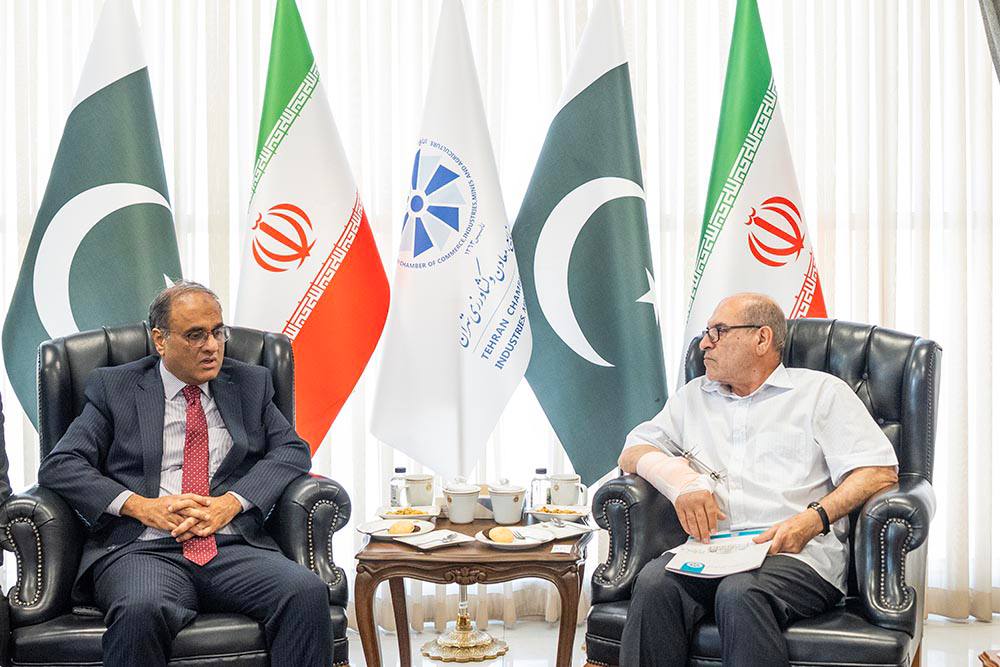
In a meeting that brought together Pakistan's Ambassador to Iran, Imran Ahmed Siddiqui, and senior officials from the Tehran Chamber of Commerce, the message was clear: the old ways of doing business are no longer sufficient. The status quo — characterized by roundabout trade routes, logistical bottlenecks, and unrealized potential — must give way to a more ambitious vision.
The gathering, which included Hesameddin Hallaj, Deputy for International Affairs at the Tehran Chamber, Ayman Juwairiyah, Commercial and Investment Attaché of the Pakistani Embassy, and Peyman Sanandaji, head of the Chamber's Transportation Committee, covered everything from customs reform to container congestion at Karachi port. But beneath the technical discussions lay a more profound recognition: Iran and Pakistan share not only a long border but also a common destiny in the region's evolving economic landscape.
A Diplomatic Push for Direct Trade
Ambassador Siddiqui, who has been actively engaging with Iranian business circles since his posting, emphasized that Pakistan sees Iran not merely as a neighbor, but as a strategic economic partner with untapped potential. He pointed to food industries, pharmaceuticals, and agriculture as sectors where cooperation could flourish — provided that trade becomes more direct and less dependent on third-country intermediaries.
"We have historically conducted a significant portion of our exchanges through indirect routes," Siddiqui observed. "Redirecting these flows toward direct channels would lower costs and create a more sustainable foundation for economic cooperation."
The Ambassador also highlighted the importance of people-to-people connections, urging Iranian companies to participate more actively in Pakistani trade exhibitions. Such presence, he argued, builds familiarity and trust — essential ingredients for long-term business relationships.
Border as an Asset, Not an Obstacle
Mahmoud Najafi Arab, the Head of the Tehran Chamber, took a pragmatic view of the current challenges. While acknowledging the deep historical and cultural ties between the two nations, he did not shy away from pointing out the gap between rhetoric and reality.
"Despite our long-standing relations, the volume of direct trade does not reflect our true potential," he said. With southern Iranian ports facing operational constraints, Najafi Arab argued that the shared land border—stretching over 900 kilometers—offers a viable and underused alternative.
He called for a renewed focus on border trade, not only as a matter of economic efficiency but also as a tool for regional development. "When border infrastructure works, border cities thrive," he noted, stressing that residents on both sides stand to benefit from smoother commercial flows.
The Tehran Chamber chief also expressed readiness to establish closer ties with Pakistan's major business hubs—Karachi, Islamabad, and Lahore—to tackle logistical hurdles and foster mutual confidence.
Free Trade and Long View
Perhaps the most ambitious note struck during the meeting concerned the prospect of a free trade arrangement. Najafi Arab suggested that any progress in this direction would yield immediate dividends, from reduced transaction costs to expanded market access.
"Tariff and customs facilities, coupled with practical solutions to banking and transport challenges, can unlock a new phase of economic engagement," he said. "We need to move from discussion to action—from identifying problems to implementing solutions."
Containers, Congestion, and Cooperation
On the ground, however, some problems demand urgent attention.
Peyman Sanandaji drew attention to the growing pile-up of Iranian containers at Pakistani ports, particularly Karachi, where regional disruptions have caused delays and added expenses.
"The situation is becoming critical," Sanandaji warned. "We need swift action to clear these goods and prevent further losses." He called for expedited customs procedures and improved coordination between border authorities.
In response, Ambassador Siddiqui assured the Iranian side that Pakistan's embassy remains fully committed to facilitating trade and will continue to engage with the Tehran Chamber on a regular basis to address emerging challenges.