
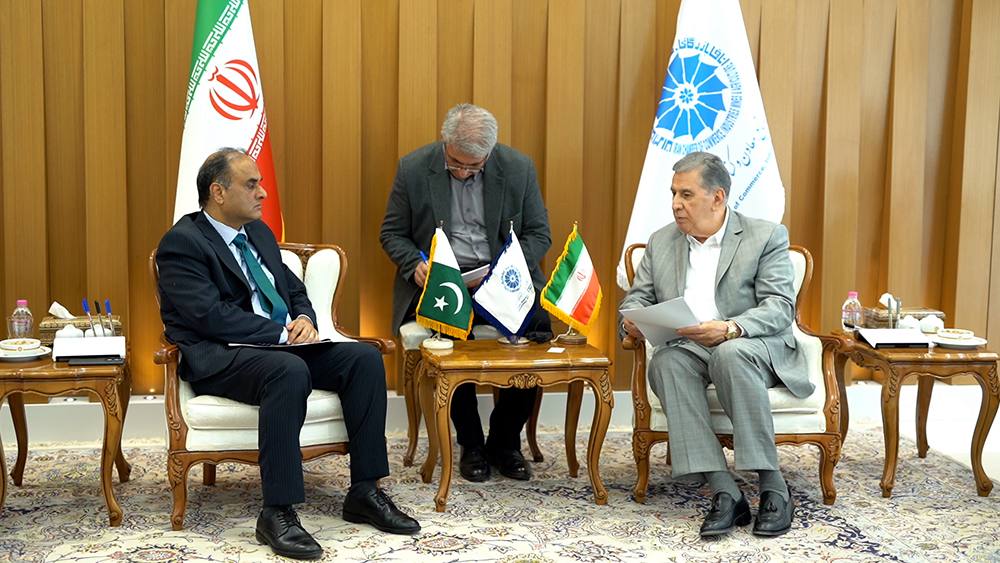
In a meeting at the Iran Chamber of Commerce, Industries, Mines and Agriculture (ICCIMA) in Tehran, Iranian business leaders laid out a comprehensive list of obstacles slowing bilateral commerce, while the Pakistani ambassador responded with concrete proposals to revitalize trade ties.
Samad Hassanzadeh, head of ICCIMA, called on Pakistan to establish a "green border corridor" that would allow for the electronic transfer of customs documents, a move he said could significantly expedite clearance procedures. The Iranian official pointed to divergent customs mechanisms as a primary cause of delays, urging greater coordination between the two countries' border authorities.
The meeting also addressed a range of operational challenges, including the prolonged detention of containers at Karachi Port, repeated testing and inspection procedures, and insufficient logistics infrastructure at key border crossings. Iranian traders, Hassanzadeh said, have suffered financial losses due to container backlogs and lengthy clearance times, compounded by restrictions on rail and road transport.
The absence of a dedicated dispute resolution mechanism in Pakistan was also raised as a critical gap. Hassanzadeh called for the creation of a structured framework to handle trade disagreements and to monitor the implementation of bilateral agreements.
In response, Pakistani Ambassador Imran Ahmed Siddiqui signaled his government's readiness to remove barriers, suggesting that border crossings could operate 24 hours a day, seven days a week to maximize cooperation opportunities. He confirmed that a proposal for customs coordination and standardization had already been submitted to Tehran, and that Islamabad was awaiting a response.
On the financial front, Siddiqui acknowledged the complexity of resolving banking and transit issues, but noted that barter trade mechanisms were being considered as a potential workaround. He also highlighted the potential for cooperation in pharmaceuticals, agriculture, and food processing, and invited Iranian participation in a specialized food industry exhibition scheduled for November 2026 in Karachi.
The ambassador described Pakistan's recent role in facilitating dialogue between Iran and the United States as an important contribution to regional stability, expressing hope that such efforts would foster a more conducive environment for economic collaboration.
Both sides agreed to establish regular quarterly meetings to review progress, with Hamed Asgari, ICCIMA's Deputy for International Affairs, appointed as the chamber's point of contact for follow-up discussions. The Iranian side also proposed compiling a timeline for joint projects and exploring the potential for Pakistani business delegations to visit Iran during specialized trade fairs.
The discussions underscore a shared recognition that strengthening economic ties requires not only political will but also practical, on-the-ground reforms. With Iran and Pakistan sharing a land border of nearly 1,000 kilometers, the unrealized potential for trade remains vast—and both sides appear determined to bridge the gap.