
Hamid Mollazadeh
China’s reliance on discounted Iranian oil has reached a new peak, underscoring a complex energy relationship that delivers short-term economic gains for Beijing while reshaping Iran’s export strategy under sustained US sanctions.
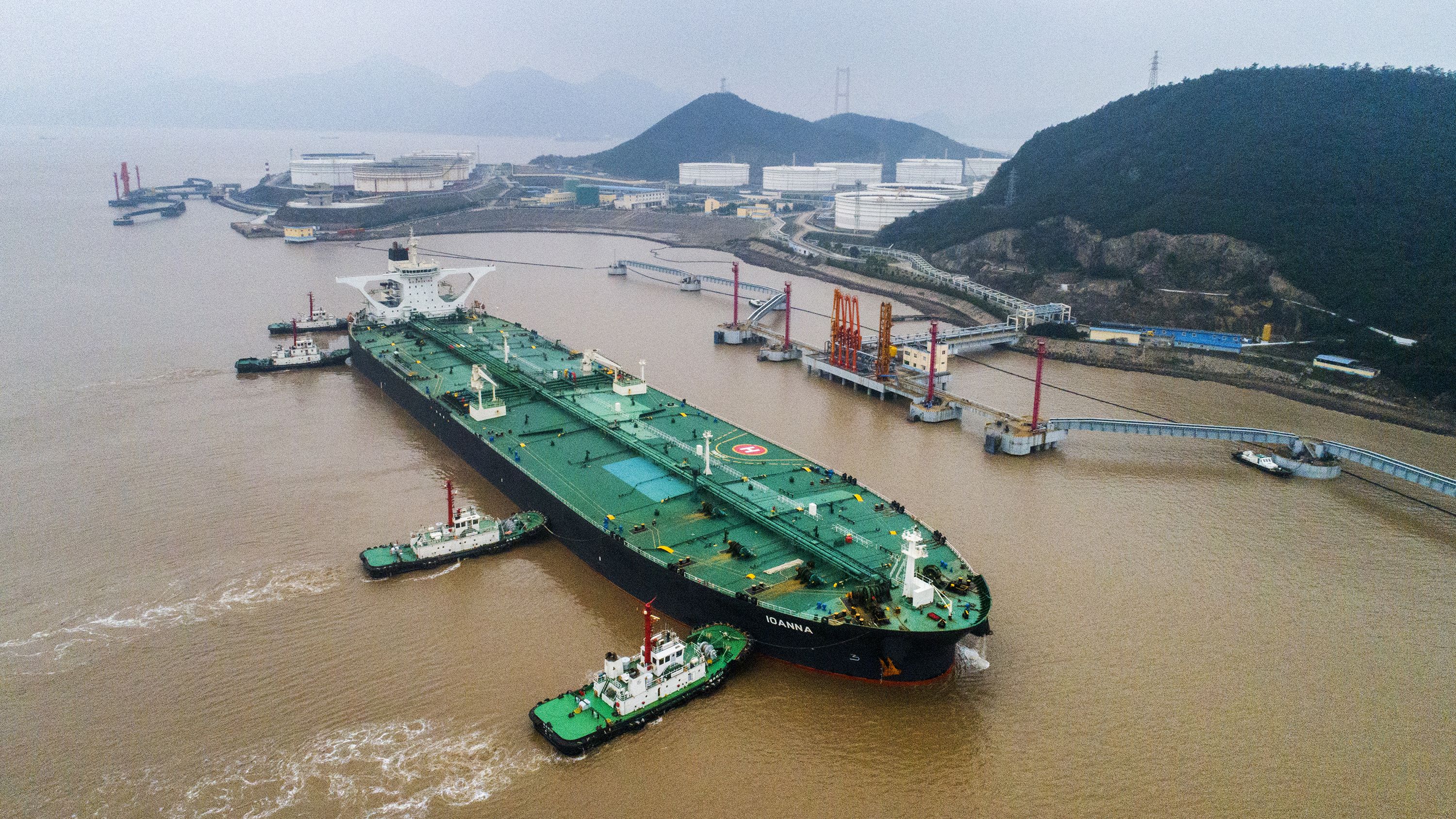
In 2025, China imported an average of 1.38 million barrels per day of Iranian crude, cementing its position as the backbone of Tehran’s oil exports and elevating Iran from a marginal supplier to a critical—if unofficial—pillar of China’s energy security.
As the world’s largest crude importer, China has moved beyond the role of a passive consumer. It now sits at the center of geopolitically sensitive energy flows involving sanctioned producers such as Iran, Russia and Venezuela.
With US sanctions sharply narrowing Iran’s pool of formal buyers since 2018, Beijing has effectively become Tehran’s primary outlet.
Estimates by analytics firm Kpler show that more than 80% of Iran’s crude oil exports in 2025 were absorbed by China, highlighting a deep and growing interdependence between the two countries.
On average, discounted Iranian crude made up about 13% of China’s seaborne oil imports in 2025, a significant share given that Beijing imported roughly 10 million barrels of crude per day over the year.
This scale has quietly transformed Iranian crude into a strategic choke point within China’s energy supply chain—one that remains largely invisible in official customs data but highly consequential in practice.
Parallel Dependence
Any disruption to Iran’s exports—whether from escalating tensions in the Middle East, instability in the Persian Gulf or tighter US enforcement—would directly reverberate through China’s energy system.
The risk is amplified by Beijing’s parallel dependence on Russian and Venezuelan oil, both also subject to sanctions and geopolitical uncertainty. While sanctioned crude has helped China cut import costs, it has simultaneously made its energy basket more vulnerable to political shocks.
Price remains the central driver of this relationship. Due to sanctions, Iranian crude is sold at steep discounts compared to global benchmarks. Market sources say “Iran Light” has traded at around $8 per barrel below Brent in recent months, up from roughly $6 last September.
For Chinese refiners, replacing alternatives such as Omani or African grades with Iranian oil translates into billions of dollars in annual savings—an advantage that has grown more valuable amid slowing economic growth and domestic inflationary pressures.
A Matter of Survival
The primary buyers of Iranian oil in China are independent “teapot” refineries, concentrated mainly in Shandong province. These operators control roughly a quarter of China’s refining capacity but run on thin margins and, at times, operate at a loss. For them, access to cheap feedstock is not a competitive edge but a matter of survival. Iranian crude, heavily discounted, fits this need precisely and has secured a stable place in their supply mix.
By contrast, China’s state-owned giants—Sinopec and CNPC—have largely stepped back from direct Iranian purchases since 2018–2019. With extensive exposure to global financial markets and international partnerships, these firms are more sensitive to the risk of US secondary sanctions. As a result, the burden—and risk—of buying Iranian oil has shifted to smaller, more flexible refiners with limited political and financial buffers.
Recent increases in Iran’s discounts are not solely market-driven. Kpler data indicate that Tehran is holding record volumes of crude in onshore tanks and floating storage—equivalent to around 50 days of production.
Slower Chinese buying at certain points, combined with Iran’s efforts to reduce the risk of shipment seizures or potential US actions, has led to stockpiling. The natural consequence has been mounting pressure to sell, pushing discounts even deeper and squeezing Iran’s revenue per barrel.
Despite the economic appeal, US sanctions remain a powerful constraint. Washington has maintained existing measures on Iran’s oil exports and, under the renewed presidency of Donald Trump, has introduced additional sanctions targeting shipping networks, intermediaries and even end-buyers.
Notably, three Chinese independent refineries have been added to US sanctions lists, prompting some mid-sized refiners to scale back purchases. While overall flows continue, caution is clearly rising.
Rejecting Unilateral US Sanctions
China’s official stance has not shifted. Beijing rejects unilateral US sanctions and considers its energy trade with Iran legitimate. In practice, however, this trade is carefully managed. Iranian oil often enters China labeled as originating from third countries, meaning official customs figures understate direct imports even as independent tracking confirms the steady flow.
Ultimately, China’s mounting reliance on Iranian oil presents a dual narrative of opportunity and risk. On the one hand, buying sanctioned crude from Iran, Russia and Venezuela has significantly reduced China’s energy import bills, easing domestic economic pressures. On the other hand, concentrating supply on politically exposed sources increases vulnerability to sudden disruptions. In a market where a single flare-up in the Middle East could derail Iran’s exports, this dependence risks becoming a strategic liability.
Cheap oil may offer short-term relief, but it is no substitute for structural energy security. As geopolitical risks and sanctions intensify, China will be forced to confront a hard choice: continue exploiting discounted sanctioned crude or accelerate diversification to shield its economy from sudden shocks. That recalibration will ultimately define how Iran remains in Beijing’s long-term energy strategy.