
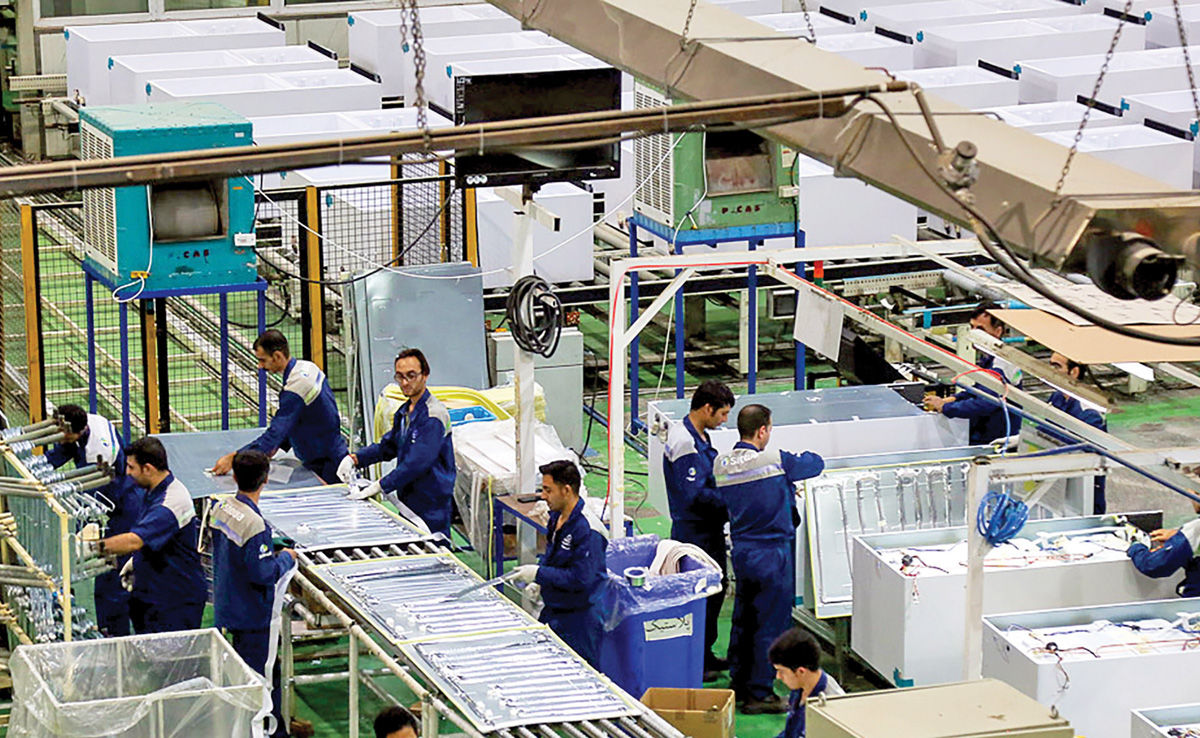
As domestic demand weakens across Iran’s industrial sector, exporting is no longer a strategic choice but an economic necessity for many producers. A sharp decline in household purchasing power, rising production costs and persistent uncertainty have left factories facing growing inventories and shrinking orders at home.
For a widening group of manufacturers, redirecting output toward foreign markets has become essential for survival rather than growth.
The downturn in domestic demand has affected a broad range of industries, from home appliances and construction materials to downstream manufacturing.
Business associations warn that if the trend persists, parts of Iran’s industrial base could face shutdowns, triggering job losses and long-term erosion of productive capacity.
Against this backdrop, policymakers and businesses are increasingly focused on whether Iran’s industries are capable of competing abroad and what barriers stand in the way.
Export capacity itself is not the core problem, according to industry representatives. Many Iranian products—particularly in food processing, agriculture and related industries—are designed from the outset with export markets in mind.
Production infrastructure in these sectors already meets basic technical and quality requirements, and surplus output can, in principle, be absorbed by external demand. The challenge lies less in production capability and more in cost structures, financial constraints and access to markets.
Years of price controls, exchange-rate volatility and limited access to modern technology have weakened the international competitiveness of parts of Iran’s industrial sector.
While advantages such as relatively low labor costs and access to domestic raw materials remain, these are offset by high overheads, expensive logistics, difficulties in cross-border payments and weak international marketing. As a result, many firms struggle to establish a stable presence in global value chains.
Other Obstacles
Trade barriers beyond Iran’s borders also weigh heavily. Tariffs and customs duties imposed by destination countries—particularly in large markets such as India—can significantly affect export volumes.
These obstacles are largely external, rather than the result of domestic customs procedures. Still, exporters face additional costs at home due to changing export regulations, administrative uncertainty and time-consuming processes, all of which reduce predictability and competitiveness.
Currency fluctuations have further complicated the situation. Recent volatility has raised the cost of imported raw materials, placing additional pressure on manufacturers already grappling with liquidity shortages.
Many factories are caught between declining sales and limited access to working capital, a combination that constrains production in the short term. The government has pledged to ease liquidity constraints through the banking system, a move that, if implemented effectively, could help stabilize output.
Exchange-rate reforms, however, may offer longer-term benefits for exporters. Narrowing the gap between official and market rates has reduced distortions that previously discouraged foreign-currency inflows.
As exchange rates move closer to market realities, exporters have greater incentives to repatriate earnings, while speculative and rent-seeking behavior becomes less attractive. This shift could improve transparency and support more sustainable export growth.
Critical Reforms
Structural reforms remain critical. Without improvements in trade facilitation, legal certainty and targeted support for export-oriented industries, the pivot toward foreign markets will remain fragile.
At the same time, restoring household purchasing power is essential to prevent excessive reliance on exports as a substitute for domestic demand.
Iran’s current strategy reflects a delicate balancing act that relies on exports as a pressure valve for struggling industries while gradual reforms are pursued to stabilize the broader economy.
If financial support reaches producers and regulatory obstacles are eased, exports can help preserve industrial capacity and employment. Without such measures, however, the export push risks remaining a temporary fix rather than evolving into a durable solution.