
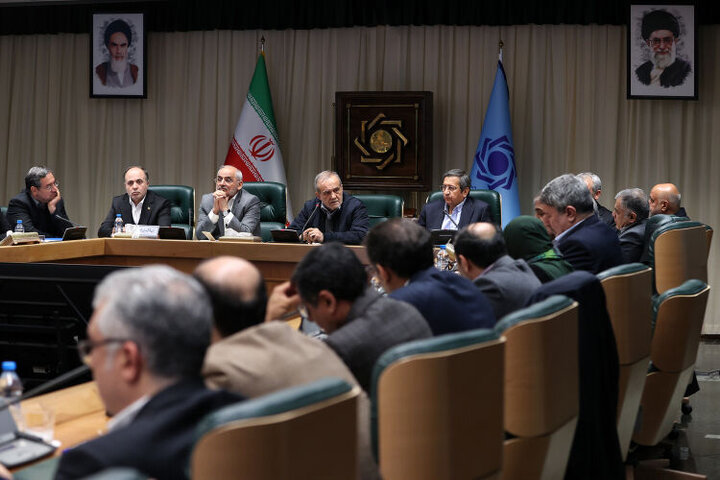
President Masoud Pezeshkian granted provincial governors in border regions broad authority to expedite the import of essential goods through three methods, namely “currency-free imports,” “bartering,” and “maritime transport”, bypassing bureaucratic hurdles and lengthy processes, Tasnim news agency reported.
The directive was issued Monday evening during a meeting with economic ministers and border province governors at the Central Bank of Iran (CBI).
Governors are authorized to operate without limitations and with the utmost speed, circumventing previous procedures and system delays. They are also tasked with submitting comprehensive performance reports to both the CBI and a task force for improvement of people’s food security and livelihood within one month.
Pezeshkian highlighted the positive impact of this approach, stating that its implementation would “neutralize a significant portion of the pressures resulting from oppressive sanctions aimed at constricting the livelihoods of the Iranian people.”
He pledged transparent and accurate communication with the public regarding the implementation and effects of the policy.
“In the current conditions of the country, it is necessary to act with greater speed and precision, free from conventional routines and slow-moving bureaucratic processes,” the President said. “Cumbersome systems and superfluous processes should not impede the import of essential goods from borders.”
The President further clarified that governors can help import not only essential goods but also any items directly related to people’s livelihoods and needed by the market, to balance the market and prevent hoarding and disruptions to the distribution system.
The Pezeshkian administration’s latest economic measure, dubbed an “economic surgery,” involved the elimination of preferential exchange rates for essential goods imports, aiming to combat rent-seeking.
However, this policy inadvertently led to a sharp increase in the prices of these goods. In response, the government implemented a food voucher program, providing monthly credits of about $7 per person to household heads for purchasing specific items from designated stores.
During the meeting, Central Bank Governor Abdolnaser Hemmati reported that 77 million citizens have already used their vouchers. He also stated that over $2.25 billion in foreign currency has been traded in the country’s commercial market, with $518 million credit allocated for the food voucher program.