
Iranian government spokesperson Fatemeh Mohajerani said the administration’s approach is to support free access to information, but it will abide by security agencies’ decision when it is necessary to shut down the internet to ensure national security and protect human lives.
The remarks came in response to repeated questions from journalists regarding the ongoing disruption of international internet access and restrictions on several online platforms.
Following economic protests in early 2026 that escalated into violence and resulted in numerous casualties, Iranian authorities implemented a nationwide internet shutdown, citing the presence of foreign-backed terrorist groups threatening security.
Despite the subsidence of unrest, the restrictions have largely persisted, although limited access has been granted to certain organizations. These limitations have created significant challenges for online businesses and the digital economy in particular.
Mohajerani explained that the events in early January had a security-related nature, leading to the national internet shutdown based on the assessment and recommendations of security policymakers.
“It is evident that the government’s approach is to support the internet and related businesses,” Mohajerani said. “In this regard, the Ministry of Economy has adopted specific measures to minimize the impact on revenues, particularly tax revenues.”
She stressed, however, that these measures have been minimal, including limited internet access for some merchants and traders, particularly members of the Chamber of Commerce.
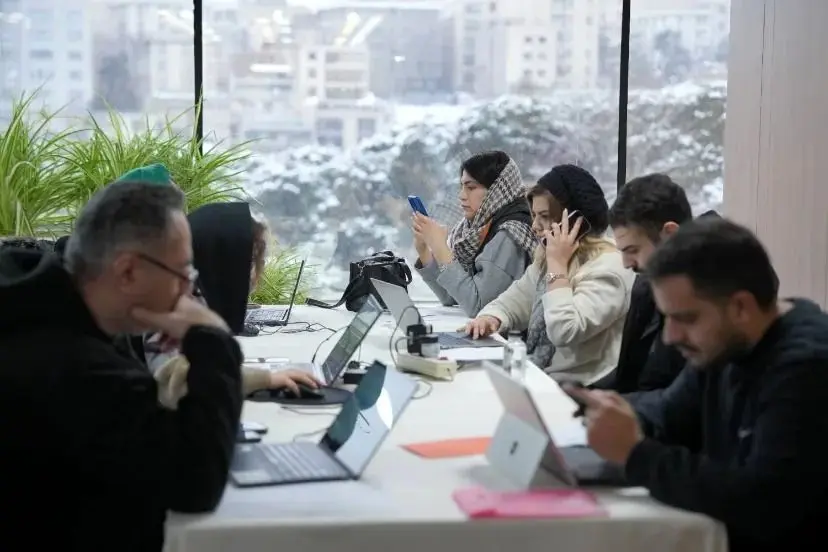
The Iranian Chamber of Commerce previously announced that several computers had been set up within the Chamber for merchants and traders to access the internet.
Majid-Reza Hariri, Chairman of the Iran-China Chamber of Commerce, clarified that holders of trade licenses can use the internet for up to 20 minutes daily under the supervision of an observer. He deemed this timeframe insufficient and highlighted other challenges faced by traders.
“Messaging apps are crucial for communication between traders. All our communications with foreign counterparts are through messaging apps. WeChat has been intermittently available for those of us connected to China, but other messaging apps are not. We even face difficulties accessing various websites for sourcing,” Hariri stated. “Besides, many businesses are not members of the Chamber of Commerce, but their businesses are directly linked to the internet.”
Regarding internet-based businesses, Mohajerani stated that the Vice-Presidency for Science and Technology has designed compensation packages consisting of eight support plans, but provided no further details about these packages.
“It is, of course, very important for the government, as an institution whose revenue includes taxes, that businesses remain operational. Furthermore, the President believes in free access, but in situations where our safety is threatened, our security agencies must naturally take the lead,” Mohajerani added.
In recent days, some users have temporarily regained access to the internet, sparking speculation about government efforts to test a tiered internet system, where access levels would vary for different segments of society.
Mohajerani rejected the rumors, explaining that traders, merchants, and businesses have gained minimal access to the internet, but the general public does not have access under what could be described as a tiered system.