
Iran's petrochemical industry, a vital sector for the nation, stands at a historical crossroads. Its future trajectory will directly impact Iran's financial balance, employment, and competitive standing in regional and global markets.
This industry, established to transform the country's gas advantage into added value, has reached a critical juncture after two decades of extensive investment. With current investments dwindling to approximately $1.5 billion, a redefinition of development and financing models is imperative.
The sector's historical evolution reveals that each growth phase has been intrinsically linked to factors such as access to financial resources, political stability, and the potential for international engagement.
In an era marked by intense competition, rapid technological shifts, and evolving global production hubs in the international petrochemical market, sustained growth in Iran necessitates a perspective that extends beyond the mere physical expansion of production facilities.
Concurrently, as European plants shut down and global production centers shift, the regional distribution of petrochemical products is undergoing a transformation. Persian Gulf Arab states are actively vying for a larger share of the European and East Asian markets.
Amidst these developments, the decline in investment within Iran's petrochemical industry stands in stark contrast to the country's strategic position, underscoring the urgent need for policy review and more astute decision-making.
Investment sustainability, access to advanced technologies, and the rebuilding of trade relations and marketing networks to penetrate new markets are key determinants for the industry's future.
Alongside these transformations, the role of government development policies and domestic financial institutions, as well as the absence of international companies in terms of investment and technology transfer, have become increasingly significant in sustaining capital flow.
Record-Breaking Performance at Masjed Soleyman: The Fruit of "Responsible Production"
The Masjed Soleyman Petrochemical Industries Company, despite facing significant obstacles such as war, power and gas outages, and other limitations confronting vital industries, has achieved its daily nominal capacity of 3,250 tons since the beginning of the Iranian year 1403 (March 2024).
It has recorded an unprecedented cyclical production output of 710,313 tons to date, with over two months remaining in the current year. This production volume represents a 12-year record.
The company, which commenced operations in 2021 and is recognized as a key regional player, has taken a significant stride toward globalization with this achievement. This success is attributed to a commitment to engineering principles, dedication to sustainable development, and adherence to Environmental, Social, and Governance (ESG) standards.
Management of Innovation and Sustainability (MIS) in Practice
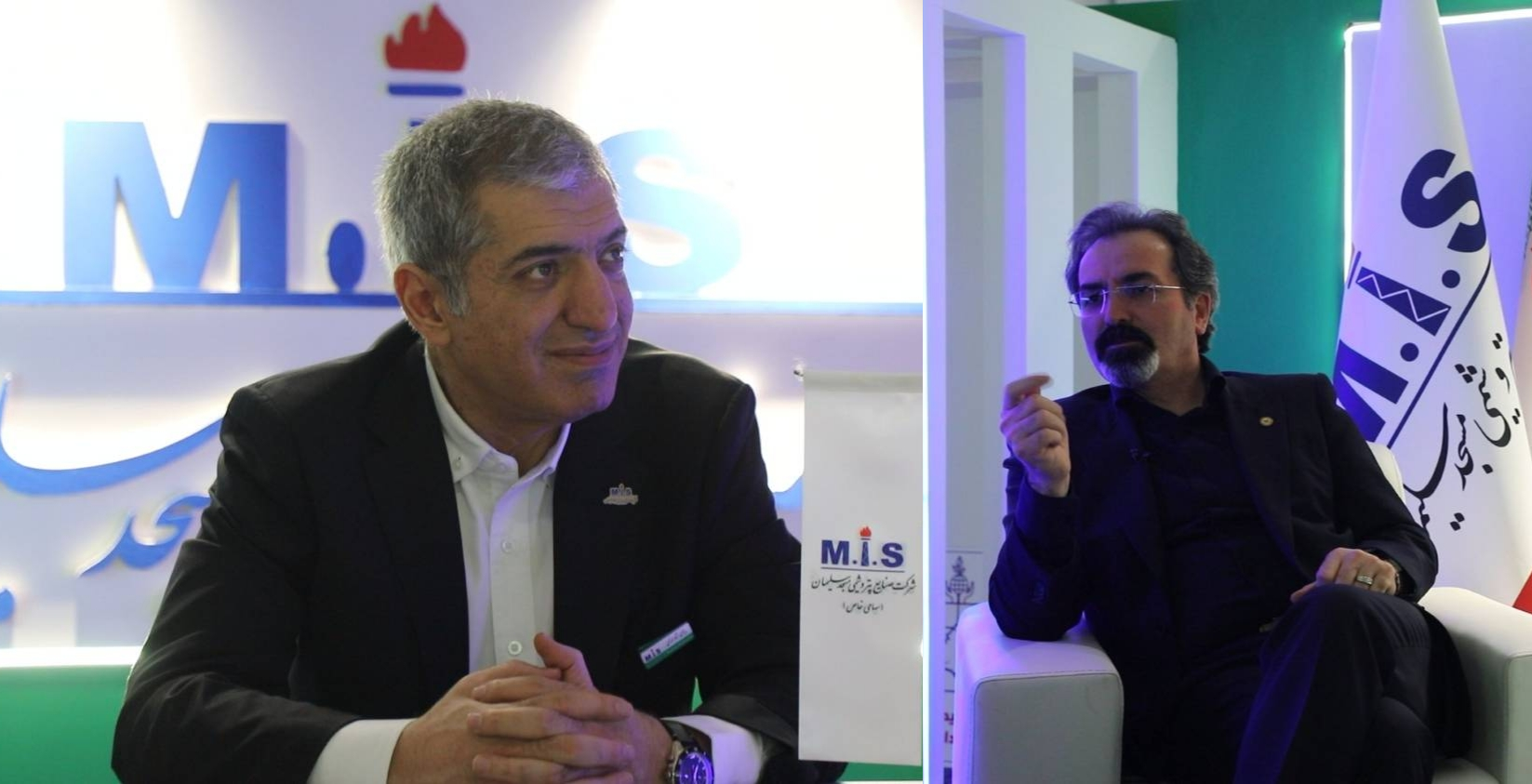
In an interview with Donya-e-Eqtesad, Peyman Shah-Owaisi, Managing Director of Masjed Soleyman Petrochemical Industries Company, highlighted the company's objective to increase production within the framework of its sustainable development plan.
He stated, "Our products are ammonia and urea. Urea is a strategic product in the global food industry. The company's current production capacity stands at 1.1 million tons per year, directly employing approximately 1,300 individuals."
He added, "A portion of the produced ammonia is utilized as feedstock for the urea units, with over 200 tons of surplus ammonia sold daily."
The Inevitable Transition: From Quantity to Quality and Sustainability
While domestic planning has primarily focused on increasing production volume, global demand is shifting toward quality, sustainability, and eco-friendly "green" products. Shah-Owaisi emphasized that the company holds two reputable international licenses from Toyo (Japan) and Casale (Switzerland), ensuring its products are among the highest quality petrochemicals available.
He continued, "Seventy percent of our production is exported, and 30 percent is allocated to the Ministry of Agriculture-Jihad, as obliged by law. Current export destinations include Middle Eastern countries (such as Oman), African nations, and a small portion goes to South America. In alignment with the United Nations' 17 Sustainable Development Goals, particularly those concerning the environment, the company makes every effort to adhere to international standards and maintain its 'green' status, despite encountering initial challenges in this domain."
Bridging the Gap Between Aspiration and Reality: Why Development Plans Lag?
Development plans for Iran's petrochemical industry have consistently commenced with ambitious objectives. However, their implementation is often hampered by structural and managerial limitations, and in recent years, by energy imbalances.
A lack of coordination between policymakers and producers, frequent changes in export regulations, and customs tariffs are among the factors contributing to the slow realization of these goals.
Shah-Owaisi referencing the company's nascent stage in its pursuit of sustainable development, highlighted Masjed Soleyman's status as "the city of firsts." In line with this vision, and with the approval of the upstream holding company (Saba Energy Holding) and the board of directors, a new deputy division titled "Planning and Sustainable Development" has been established within the organizational structure.
As a component of the larger Saba Energy Holding, this company is set to pioneer these efforts, with plans for successful initiatives developed by this division to be extended to other group companies upon their fruition.
Despite facing adversities such as operational halts during wartime and an 11-day gas outage at the beginning of the year, the company has managed to break its periodic production records in less than eight months, Shah-Owaisi emphasized, underscoring the strength of its human resources.
Social Responsibility in a Deprived Region: An Imperative, An Opportunity
Although this company is experiencing its first profitable year and petrochemical companies deemed unprofitable are generally not permitted to engage in social responsibility activities (unless with the approval of the general assembly or upstream holding), providing essential social services has been a necessity due to the company's location in a deprived area.
Efforts are underway to launch employment-generating projects next month, utilizing local personnel in units of 50 to 100 individuals within the region.
Shah-Owaisi identified this initiative as the most significant contribution the company can make to the region, stating their readiness to participate in large-scale social responsibility projects in cities and their peripheries.
Another achievement from the company's Sustainable Development division is the unveiling of the innovative "Ta’aleague" project. This initiative, designed for organizational excellence with a focus on sustainable, individual, and human development, is currently being promoted in other industries and companies within the sector in collaboration with the National Petrochemical Company (NPC) after its success internally.
Financing Methods and Their Impact on Iran's Petrochemical Industry
Regarding financing methods and their effects on Iran's petrochemical industry, Shah-Owaisi stated that two primary objectives are pursued when entering into contracts with banks and financial institutions: Firstly, securing better facilities for human capital to maintain and enhance personnel productivity; and secondly, financing development phases and increasing working capital, which is currently under negotiation. To this end, memorandums of understanding have been signed with Mehr Bank, Shahr Bank, and other financial institutions.
Financial Innovation: The Key to Unlocking Capital for Petrochemicals
In an interview with Donya-e-Eqtesad, Ali Panahi, Managing Director of Saba Energy Holding, echoed the necessity of financing for achieving sustainable development goals.
Saba Energy Holding, operating across the oil, gas, petrochemical, steel, power generation, and commerce sectors, boasts a market capitalization exceeding 102 trillion tomans and an annual turnover of over 300 trillion tomans, with more than 50% of its annual profit derived from its managed subsidiary companies.
He identified "establishing corporate governance," drawing on global and domestic experiences, as a prerequisite for achieving the goals of the Seventh Development Plan. Panahi stressed that complete transparency of information is essential as a representative of the shareholders. The holding's primary approach within this framework involves entering domestic and international markets by utilizing modern financial instruments such as "crowdfunding." This method can attract up to 100 billion tomans in a short period through public participation.
Panahi also cited the "lack of awareness and bidirectional communication between industry and the capital market" as a national issue. Highlighting the projected export of approximately $900 million by the end of the year (with Masjed Soleyman Petrochemical contributing over $300 million), he noted that these foreign exchange resources create significant potential for future investments.
Three Fundamental Obstacles to Realizing Export Dreams
Panahi concluded by asserting that achieving the goals of the Seventh Development Plan and the export-oriented role of the petrochemical industry will only be possible by overcoming several fundamental obstacles: Firstly, the issue of sustainable financing; secondly, technological development and enhancement of human capital quality; and thirdly, access to new markets aligned with increased production capacity.
In this regard, active participation in the emerging markets of Africa, Latin America, and South Asia could complement traditional markets and ensure Iran's export stability in the long term.
Ultimately, the transformation of Iran's petrochemical industry, despite all challenges, hinges on the integrated management of innovation and sustainability (MIS). Successes, such as the performance of Masjed Soleyman Petrochemical Company, demonstrate that the combination of "responsible production," "financial innovation," and "focus on quality and new markets" is not merely an option but the sole viable path forward.