
Hamid Mollazadeh
Iran has pushed daily gas production from the South Pars field in the Persian Gulf to a new historic high, but the milestone underscores a deeper strategic dilemma: how long output can be sustained before the field’s declining pressure turns today’s records into tomorrow’s constraints.
According to the National Iranian Oil Company (NIOC), gas extraction from South Pars has surpassed 730 million cubic meters per day, the highest level ever recorded. The figure represents an increase of about 25 million cubic meters per day compared with the last year’s output and has been achieved within just 15 months.
Crucially, this growth has not come from pressure boosting—widely seen as the only long-term solution to the field’s production decline—but from a more immediate strategy: accelerating the completion of semi-finished wells and expanding intra-field drilling, all categorized as temporary solutions to keep the output high.
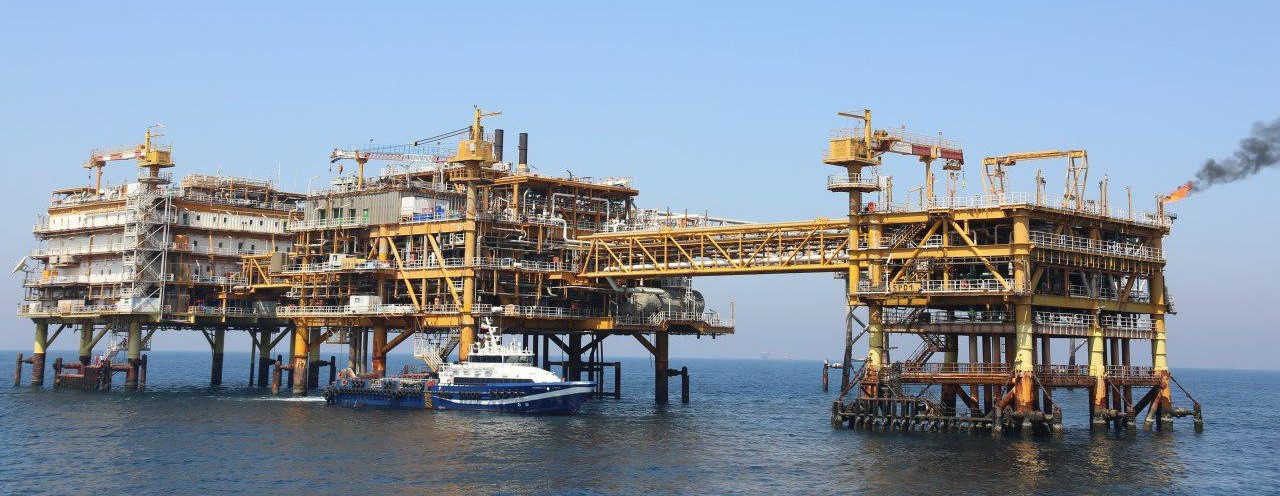
South Pars is the backbone of Iran’s energy system, supplying more than 80 percent of the country’s natural gas. Shared with Qatar, the giant offshore field has been producing at near-plateau levels for years, even as reservoir pressure has gradually fallen.
That decline has made pressure boosting not merely a technical upgrade, but a national priority. Contracts for the massive pressure boosting project were signed last year, raising expectations of a long-awaited turning point. Yet implementation has yet to begin, largely due to financing constraints and even if the first phase moves forward, it will take several years before its impact is felt in production figures.
Calculated Effort
In this context, Iran’s current production gains appear less like a breakthrough and more like a calculated effort to buy time.
Oil Minister Mohsen Paknejad highlighted this approach earlier this winter, noting that over the past 14 months, 13 new wells have been drilled in South Pars, adding roughly 22 million cubic meters per day to raw gas output. With four additional wells scheduled to come online by the end of the current Iranian year, total incremental production is expected to approach 30 million cubic meters per day.
During a period marked by acute energy imbalance and soaring domestic gas demand, Paknejad described this increase as “significant,” particularly as it coincided with a severe cold spell that pushed national consumption to record levels.
It was last week when NIOC CEO Hamid Bovard confirmed that daily production had climbed even further, reaching 730 million cubic meters. During a visit to the South Pars complex, he emphasized that the new record reflects intensified drilling activity and improved operational readiness, including the provision of additional rigs.
“With the steps taken to secure drilling equipment and expand operations, we hope to guarantee the country’s energy production in the coming years,” Bovard said.
At the operational level, the shift in strategy is clear. Toraj Dehghani, CEO of Pars Oil and Gas Company, a subsidiary of the NIOC, said that over the past 15 months, the company has deliberately focused on bringing semi-complete wells into production rather than waiting for large-scale pressure boosting to materialize.
Despite financial limitations, this approach has delivered around 25 million cubic meters per day of stable production capacity—more than double the net increase achieved over the previous three years combined. During this period, the number of active drilling rigs in South Pars has risen sharply, from four to ten, significantly accelerating field activity.
$100 Billion in Revenue
Dehghani argues that the value of these efforts extends far beyond short-term supply. According to Pars Oil and Gas Company estimates, production from South Pars platforms generates the equivalent of nearly $100 billion in annual revenue for the country.
Beyond fiscal returns and energy security, he says, the projects have strengthened domestic technical capabilities, particularly in offshore platforms and drilling operations.
Still, officials are careful not to present the current strategy as a substitute for pressure boosting. Dehghani has repeatedly stressed that intra-field drilling and pressure boosting are complementary, not competing solutions.
Several initiatives are moving in parallel, including the development of Phase 11 at the border section of South Pars and progress on other shared fields. The jacket for the 11 Alpha platform was installed last month, and preparations are underway to deploy drilling rigs for new wells in this strategically sensitive zone.
Farzad B Gas Field
Beyond South Pars, attention is also turning to other delayed projects. The Farzad B gas field in the Persian Gulf, shared with Saudi Arabia and long stalled, is finally moving forward.
Its offshore jacket is scheduled for installation this year, with drilling expected to begin in early 2026, signaling a broader push to secure Iran’s gas production base.
Yet the pressure boosting project remains the central unresolved piece. Dehghani acknowledges that it requires substantial capital and that final engineering is still underway. Once regulatory approvals are secured, the project will move into procurement and execution—but the timeline remains uncertain.
For now, Iran’s record production from South Pars reflects operational agility rather than structural resolution. By prioritizing semi-finished wells and expanding drilling capacity, the country has managed to push output higher at a critical moment. But without pressure boosting, these gains may prove temporary. The race, increasingly, is not just to produce more gas today, but to ensure that South Pars can continue delivering tomorrow.