
Hamid Mollazadeh
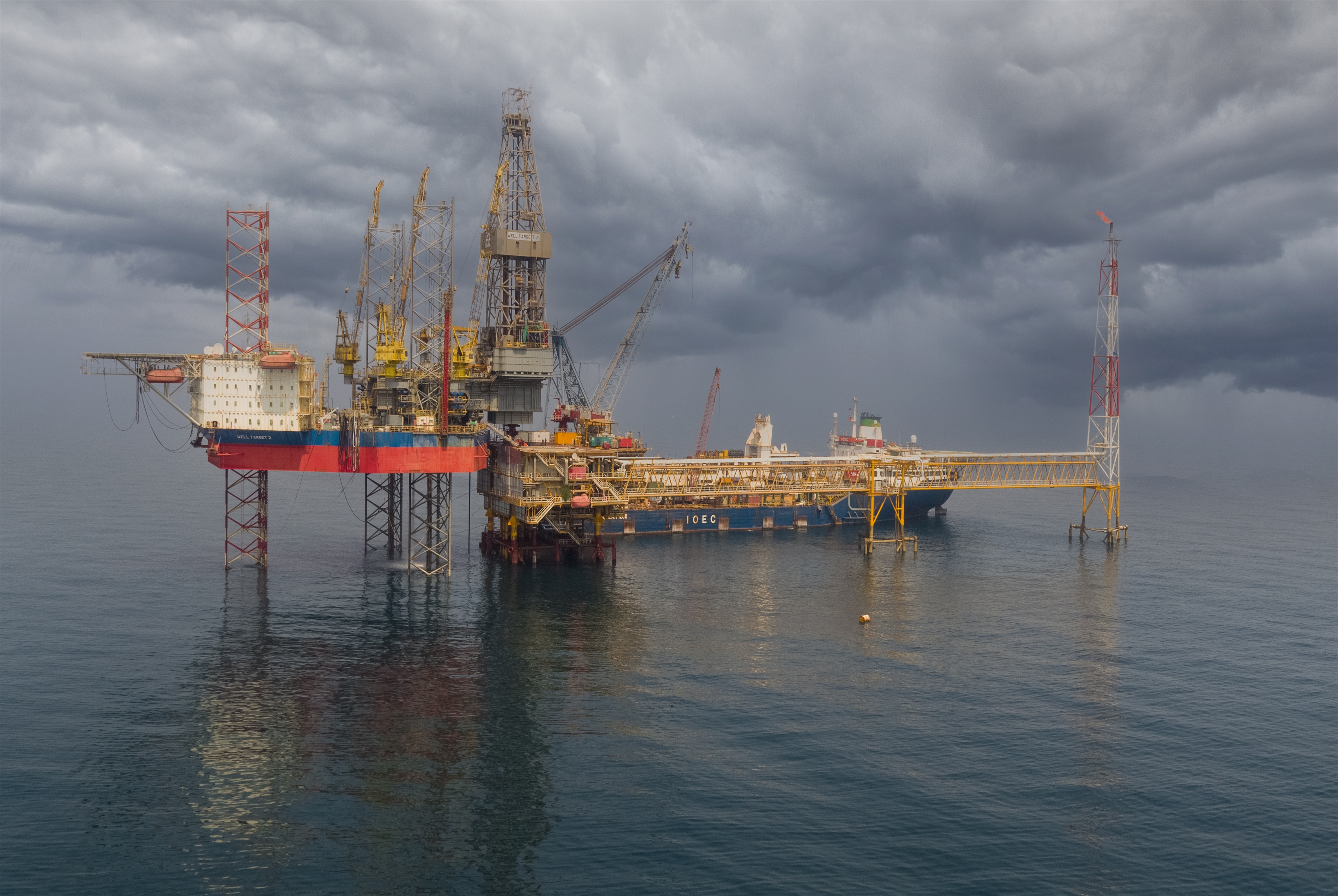
Nearly 30 percent of Iran’s recoverable gas reserves lie in fields shared with neighboring countries, including Qatar, Saudi Arabia and Kuwait. Among them, the Farzad B gas field—located some 15 kilometers off Farsi Island in the Persian Gulf—has come to symbolize far more than a technical development project. It has become a litmus test for Iran’s broader energy governance: a reflection of domestic engineering capabilities on the one hand and long-standing structural weaknesses in decision-making, financing and regional competition on the other.
With gas in place estimated at over 600 billion cubic meters—roughly half of which is recoverable—Farzad B ranks among Iran’s most complex offshore gas development ventures. High pressure and temperature, coupled with extremely sour gas containing around 40,000 parts per million of hydrogen sulfide, place the field firmly in the category of high-risk, capital-intensive projects.
In such fields, time is not merely a scheduling variable; it is a decisive economic and strategic factor. Any delay or design misstep can multiply costs during the production phase and erode the project’s economic viability.
Official statements point to tangible progress: more than 80 percent completion of the first offshore jacket, finalized geophysical and geotechnical studies and preparations for installing key structures. Yet Iran’s own experience with similar projects suggests that the most challenging phase often lies between reported physical progress and the achievement of stable production. This is where projects tend to encounter financial bottlenecks, shifts in macro-level decisions and technological constraints.
The recent decision to relocate the onshore processing site from Pars 2 to Pars 3, and the subsequent need to revise infrastructure designs, illustrates this structural vulnerability. While such changes may be technically justified, their cost is ultimately paid in production delays and added pressure on the country’s already strained energy balance.
Strategic Weight
The strategic weight of Farzad B becomes even clearer when viewed through the lens of Iran’s quiet but consequential gas competition with Saudi Arabia. Unlike the oil market—where rivalry is overt and highly public—the gas race in the Persian Gulf is gradual, technical and far more expensive.
In shared reservoirs, the country that reaches sustained production first effectively alters reservoir pressure dynamics and captures a larger share of the common resource. This is not achieved through political declarations, but through development speed, financing certainty, and operational efficiency.
Over the past decade, Saudi Arabia has elevated gas development from an industrial objective to a core pillar of its energy security and economic diversification strategy. Access to foreign capital, advanced technologies and flexible contractual frameworks has enabled Riyadh to move complex gas projects forward with greater time certainty.
Iran, by contrast, continues to pursue shared field development within the constraints of budgetary pressure, political considerations and a strong emphasis on technological self-reliance. The result is an asymmetric competition in which every month of delay on the Iranian side effectively consolidates the position of the counterpart in the shared reservoir.
From this perspective, Farzad B is not simply another gas project. It is a stress test of Iran’s ability to manage large-scale, high-risk developments in a competitive regional environment. Reliance on domestic engineering capacity has delivered notable achievements, but without stable financing mechanisms, professional risk management, and faster decision-making, it risks turning from an asset into a liability.
Processing the sour gas of Farzad B requires advanced treatment technologies, stringent safety standards, and sustained investment throughout the field’s life cycle—requirements that remain uncertain in the absence of a clearly defined economic model.
Widening Energy Imbalance
At the macro level, the fate of Farzad B is directly linked to Iran’s widening energy imbalance. Every cubic meter of gas that enters the national network with delay translates into greater fiscal pressure, higher fuel imports, and more distortionary pricing policies. In this sense, Farzad B could either become a meaningful tool for easing the country’s gas deficit or join the growing list of unrealized capacities constrained by chronic delays.
More broadly, the project underscores the strategic importance of Iran’s shared oil and gas fields. The country shares more than 28 hydrocarbon fields with neighbors such as Qatar, Saudi Arabia, Iraq, Kuwait, the UAE and Oman.
These fields account for over 20 percent of Iran’s oil reserves and roughly 30 percent of its recoverable gas reserves. South Pars—the shared field with Qatar—remains the most prominent example, playing a decisive role in Iran’s domestic energy balance and regional exports. Yet Qatar’s earlier start and massive investment have allowed it to maintain higher production from the shared reservoir, despite Iran’s ongoing efforts to narrow the gap.
In other shared fields with Iraq, Kuwait and the UAE, differences in investment levels, technology access and contractual structures have similarly tilted production in favor of Iran’s neighbors. This reality highlights a central lesson: success in projects like Farzad B depends not only on technical competence, but also on rethinking cooperation policies, joint investment models, and contractual frameworks that can protect Iran’s share of common resources.
Cost of Delay
The unresolved Arash gas field further illustrates the geopolitical cost of delay. Situated in the northern Persian Gulf, Arash has long been at the center of disputes between Iran, Saudi Arabia and Kuwait.
Competing claims over maritime boundaries have effectively frozen development, turning the field into a symbol of missed opportunity. At a time when natural gas is increasingly seen as a transition fuel critical to energy security, the prolonged uncertainty surrounding Arash underscores how geopolitical stalemates can weaken Iran’s position in the regional gas equation.
Taken together, Farzad B should be viewed as a “policy-project”—one whose success or failure will resonate beyond production figures. It will shape perceptions of Iran’s capacity to manage shared fields, defend national interests and compete in an increasingly strategic regional gas market.