
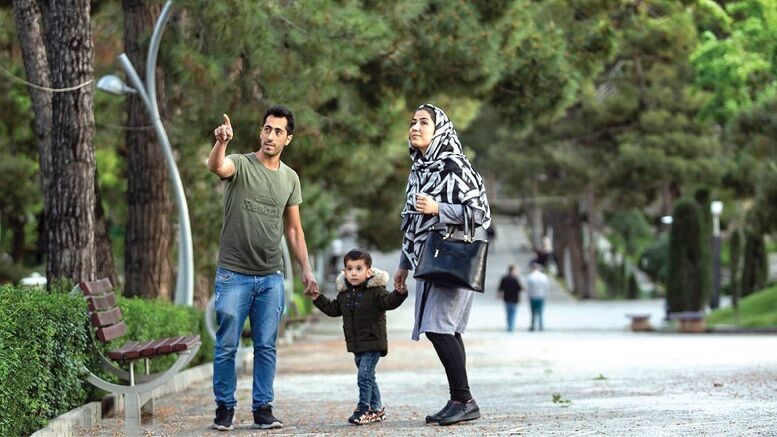
In Iran’s social architecture, the family has long functioned as the most resilient institution—a final refuge against political instability and economic hardship. Yet today, this last line of defense is itself under severe strain.
In an interview with sociologist Reza Sharifi-Yazdi, the crisis of the Iranian family is reframed not as a cultural deviation, but as the cumulative fallout of economic, political and institutional dysfunctions that have cascaded downward into private life.
Sharifi-Yazdi argues that official narratives—which often blame declining fertility and delayed marriage on lifestyle changes or “Western cultural influence”—miss the core of the problem.
In reality, the erosion of family life reflects what he calls a “functional depletion” of the family: a condition in which households are forced to devote all available resources to survival, leaving no capacity for child-rearing, emotional bonding or long-term planning.
From a sociological perspective, Sharifi-Yazdi situates the family alongside four other foundational institutions: the economy, politics, education and belief systems. While none of these institutions ever disappear, their malfunctioning profoundly reshapes society.
Over the past six to seven decades, Iran has undergone a turbulent transition from a traditional to a modern social order—a process that has reconfigured all institutions, but has hit the family hardest.
Real Danger
The result is not the disappearance of the family, but its fragmentation into multiple forms. The nuclear family remains dominant, but extended families have sharply declined, while modern arrangements such as cohabitation have emerged at society’s margins. These changes, Sharifi-Yazdi stresses, are not inherently pathological; they are typical of societies in transition. The real danger lies elsewhere—in the unequal role of economic pressure across social classes.
In upper-income groups, changes in family size or marriage timing are largely voluntary, shaped by lifestyle preferences and shifting values. But in Iran’s shrinking middle class and expanding lower-income strata, economics is the decisive factor.
Here, family decisions are not about self-fulfillment but about bare survival. Multiple studies, including research from Shahid Beheshti University and the University of Tehran, confirm that inflation, job insecurity, housing shortages and declining purchasing power have fundamentally altered family goals and capacities.
As the middle class “thins out,” Sharifi-Yazdi explains, its downward mobility triggers a chain reaction. The economy fails to provide stability, politics fails to ensure predictability, and education increasingly becomes a costly private good.
These institutional failures are ultimately absorbed by families. Parents work multiple jobs not by choice, but out of necessity, draining the emotional and temporal resources required for parenting. The sociological meaning of the common refrain— “we can’t afford children, financially or emotionally”—is clear: the system has stripped families of their core functions.
Superficial Policies
Government responses, particularly pro-natalist campaigns and financial incentives, are therefore unlikely to succeed. Sharifi-Yazdi views such policies as superficial, ignoring structural realities.
The deeper risks extend beyond population aging to what he terms “structural permanent singlehood”—a generation unable to form families at all.
Looking ahead to 2041 (1420 in the Iranian calendar), he warns of a society with tens of millions of elderly citizens, weak family networks and bankrupt pension systems, compounded by a large cohort of economically unsupported, socially isolated adults.
The path to recovery, Sharifi-Yazdi concludes, does not begin with cultural engineering or demographic directives. It starts with political reform to unlock economic stabilization. Without restoring economic functionality—controlling inflation, creating jobs and rebuilding trust—efforts to revive the family institution will remain futile. In his assessment, the fate of Iran’s family is inseparable from the fate of its political economy.