
Hamid Mollazadeh
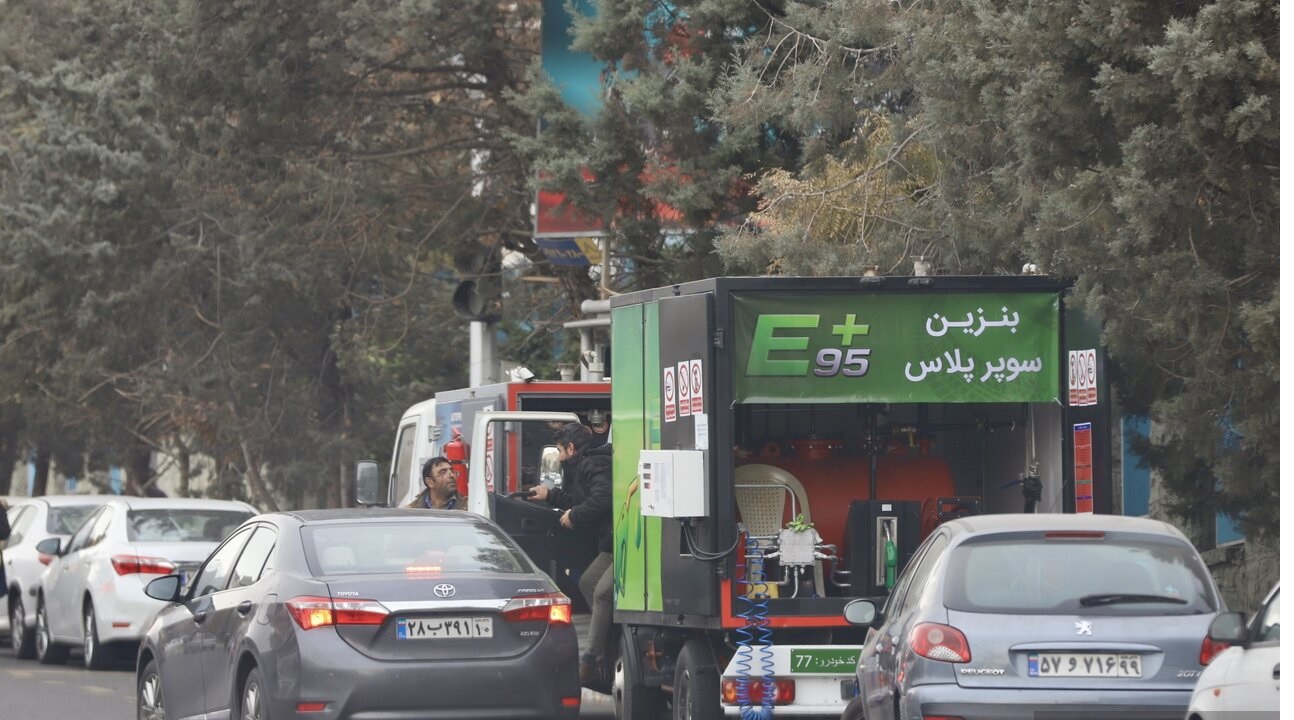
The launch of imported premium gasoline in Iran was meant to mark a modest but meaningful shift in fuel policy: a move toward higher quality, greater product diversity and a partial response to the needs of modern engines operating on fuel below global standards. Instead, the experiment quickly turned into a revealing failure.
Despite official backing, sales of imported super gasoline have been negligible, underscoring how deeply Iran’s fuel market remains constrained by subsidies, rigid structures and consumer economics.
According to Iran’s Association of Fuel Station Owners, public demand for imported premium gasoline has been “close to zero.” In a country consuming more than 120 million liters of gasoline per day, daily sales of just a few thousand liters are statistically insignificant.
This gap between policy intent and market response raises a central question: why did Iranian consumers reject higher-quality fuel so decisively?
The most immediate factor is price, but price alone does not tell the full story. Iran’s fuel economy has been built for decades around heavy subsidies, making cheap gasoline a social norm rather than a market outcome. Consumers are conditioned to evaluate fuel purchases almost exclusively through the lens of daily cost. In such an environment, gasoline sold at around 84,000 tomans (58 cents) per liter including taxes, distributor fees, transport and the network’s profit margin—many times the subsidized rate—faces an almost insurmountable barrier, regardless of quality.
For most drivers, the decision is not technical but economic. Even those aware of potential benefits, such as higher octane or cleaner combustion, struggle to justify paying several times more for a product that does not deliver an immediate and visible improvement. As a result, imported premium gasoline was quickly categorized as a luxury item—non-essential and easily avoidable.
Imperceptible Advantages
This perception was reinforced by the limited and often imperceptible, quality advantage for the majority of vehicles on Iranian roads. While the fuel is genuinely imported and differs in octane rating, the practical benefits are largely confined to a narrow group of modern, high-compression engines. Iran’s vehicle fleet, dominated by older and mid-range cars, is simply not designed to extract meaningful gains from higher-octane fuel. For most motorists, the difference is neither felt nor seen.
Compounding this problem was weak public communication. There was no sustained effort to explain, in practical terms, how premium gasoline could reduce engine wear, improve efficiency or lower emissions over time. Without a clear narrative linking higher price to tangible value, consumers defaulted to the simplest conclusion: it was just expensive gasoline.
Structural issues within Iran’s fuel market further undermined the policy. The distribution system, fuel card mechanism and pricing framework are all designed to ensure universal access to cheap fuel, not to support competition or quality-based segmentation. Introducing a high-priced product into this system without broader reform left premium gasoline without a clear market niche. It was neither targeted at specific vehicle categories nor supported by incentives that could encourage behavioral change.
Even at the wholesale level, uncertainty played a role. The first batch of imported premium gasoline was offered on the Energy Exchange in early December 2025 at a base price of 65,800 tomans (45 cents) per liter, with little competition. A planned second offering at a higher price was halted following regulatory intervention, and the price reverted to its original level. These abrupt shifts sent a clear signal of policy hesitation, discouraging distributors and reinforcing consumer skepticism.
Swinging Prices
Currency volatility added another layer of risk. Importing fuel in an environment of sharp exchange-rate fluctuations makes long-term planning nearly impossible. Industry representatives have openly questioned the viability of continuing imports when prices can swing dramatically within days. In such conditions, neither importers nor consumers are willing to commit.
Ultimately, the failure of imported premium gasoline should not be read as a rejection of quality by Iranian consumers. Rather, it highlights a deeper mismatch between policy ambitions and economic reality. Market-based tools cannot function effectively within a system dominated by heavy subsidies, price controls and weak demand signals.
The experience offers a broader lesson for Iran’s energy policy. Without addressing the underlying structure of fuel pricing, consumer incentives, and market design, introducing higher-quality or higher-priced products will continue to fail. Imported super gasoline did not simply struggle to compete—it exposed the limits of partial reform in a fuel economy still governed by political and social constraints rather than market logic.