
Hamid Mollazadeh
The arrival of imported premium gasoline in Iran cannot be viewed merely as a technical or short-term solution to fuel supply constraints. Instead, it reflects a deeper structural divide within Iran’s energy economy—one that has long remained unresolved.
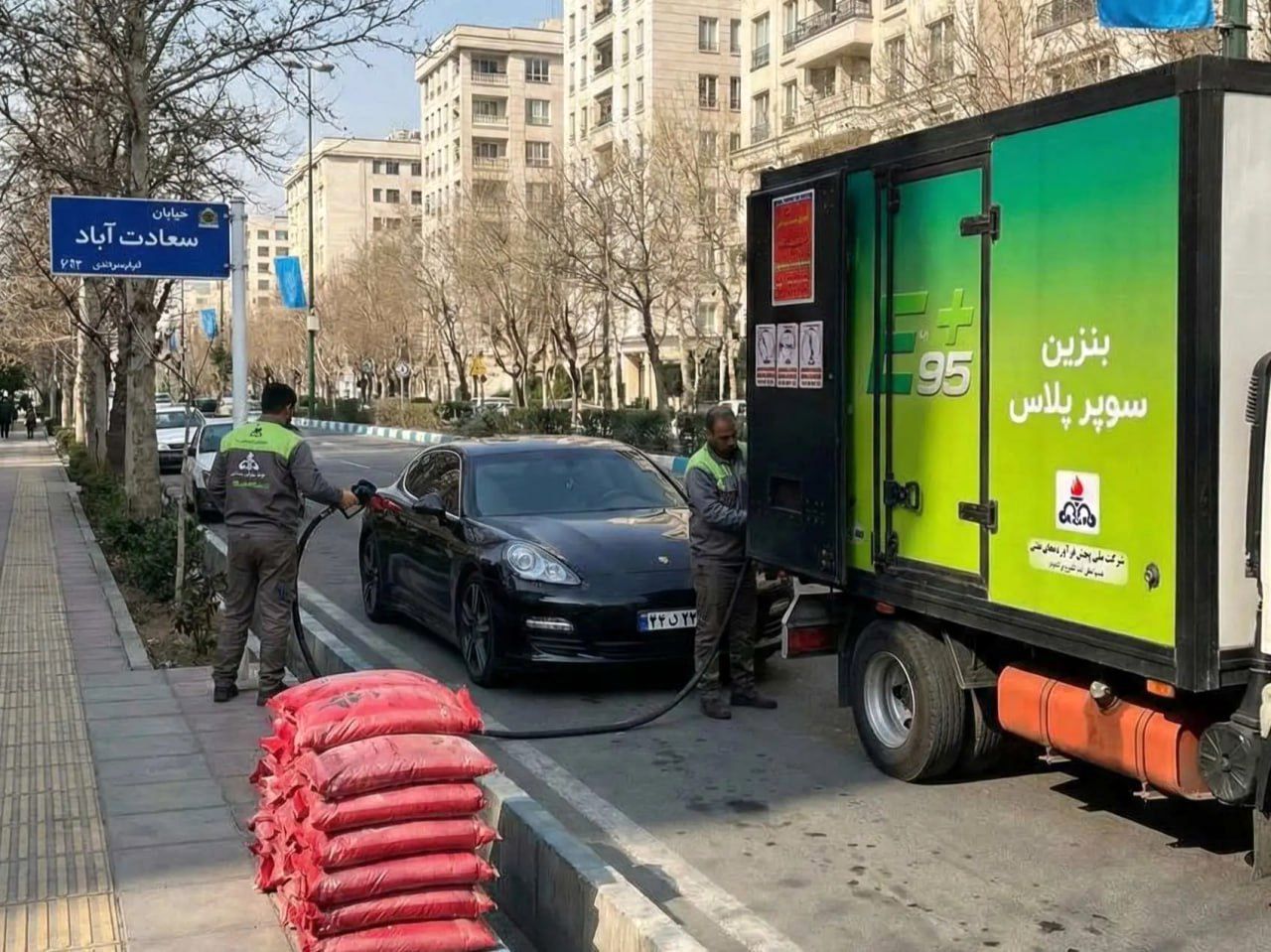
On one side stands the majority of consumers, still relying on heavily subsidized, low-priced gasoline. On the other is a smaller but growing segment of affluent drivers, particularly owners of luxury and imported vehicles, whose engines require higher-quality fuel, even at prices dozens of times higher than regular gasoline.
From an economic and technical standpoint, importing premium gasoline is a response to an undeniable reality: Iran’s domestic gasoline production system was never designed to meet the needs of a modern vehicle fleet.
Over the past decade, a significant number of luxury, hybrid and turbocharged vehicles have entered the country. These cars require high-octane fuel to prevent engine knock and long-term mechanical damage. Continued use of regular gasoline—or even domestically produced Euro-4 fuel—gradually reduces engine efficiency, increases wear and can ultimately lead to severe damage to pistons and valves. In today’s Iranian market, where spare parts are expensive and imports are restricted, repair costs can easily reach hundreds of millions of tomans.
Against this backdrop, imported premium gasoline—priced at over 80,000 tomans (60 cents) per liter—has effectively become a luxury energy product. The critical question, however, is whether the policy has satisfied its primary consumers.
Evidence suggests that satisfaction among luxury car owners is conditional. Many view the higher fuel cost as a rational trade-off compared to the risk of engine damage. For vehicles worth several billion tomans, spending a few million tomans per month on suitable fuel is often perceived as an informal insurance policy. From this perspective, imported premium gasoline has helped unlock suppressed demand for high-quality fuel and reduced reliance on unregulated additives and counterfeit fuel enhancers.
Fueled Skepticism
Yet concerns persist. Supply uncertainty, limited distribution points, and a lack of price transparency have fueled skepticism. Many consumers worry that the gasoline sold as “premium” may not consistently meet advertised standards or could be blended with domestically produced fuel along the supply chain.
In an economy where trust in product quality—especially within monopolistic markets—has historically been fragile, such doubts are hardly unfounded. As a result, consumer confidence depends not only on price but also on transparency and credible oversight of the distribution system.
At a broader level, the import of premium gasoline sends a clear economic signal: Iran’s energy subsidy model can no longer satisfy all layers of demand.
By separating subsidized gasoline from unsubsidized imported fuel, policymakers are effectively testing a form of targeted multi-tier pricing. While this approach avoids an immediate increase in prices for mass consumers, it reduces fiscal pressure on the government and introduces market-based signals into the energy sector. Although the policy directly affects only a limited segment of consumers, its implications extend far beyond a niche market.
From a distribution standpoint, imported premium gasoline could encourage greater private-sector participation and limited competition among fuel stations. However, without rigorous supervision, the market remains vulnerable to rent-seeking behavior, reverse smuggling, and price manipulation. Iran’s past experience suggests that wherever significant price gaps exist, informal economic activity tends to emerge.
Market Signals
Recent developments underscore these complexities. According to the Iran Energy Exchange, the price of imported premium gasoline has reverted from 69,500 tomans (51 cents) per liter back to its previous level of 65,800 tomans (48 cents), although supply volumes have been reduced by roughly 40 percent. Field observations indicate that at retail stations in Tehran, the final price reaches about 83,700 tomans (62 cents) per liter after transportation, storage, and distribution costs are added.
Government officials have repeatedly noted that Iran spends nearly $6 billion annually on gasoline imports, with ordinary imported gasoline costing around 60 cents per liter—roughly 80,000 tomans—before subsidies drastically reduce the pump price for most consumers.
The rollout of premium gasoline has begun in Tehran and is expanding to Isfahan as the second distribution hub, with other major cities and tourist provinces expected to follow. Demand patterns suggest that a segment of consumers is willing to pay market-based prices for higher-quality fuel, signaling a potential readiness for gradual energy price reforms.
A Test Case for Reform
Energy experts argue that imported premium gasoline represents a controlled experiment in energy price rationalization.
Hamidreza Salehi, vice chairman of the Energy Commission at Iran’s Chamber of Commerce, notes that the policy could pave the way for broader reforms—provided the government reduces its direct role in supply and allows the private sector to take the lead. According to Salehi, sustained demand for premium gasoline demonstrates that selective market pricing can coexist with social acceptance if implemented transparently and incrementally.
Ultimately, imported premium gasoline should be seen not merely as a fuel product but as a symbol of Iran’s gradual shift toward energy realism.
If managed carefully—with clear standards, consistent oversight, and greater private-sector involvement—it could mark an early step toward redefining Iran’s relationship with energy subsidies, consumption, and pricing. If mismanaged, however, it risks becoming a symbol of inequality: expensive fuel for sensitive engines in an economy still hesitant to confront the true cost of energy.