
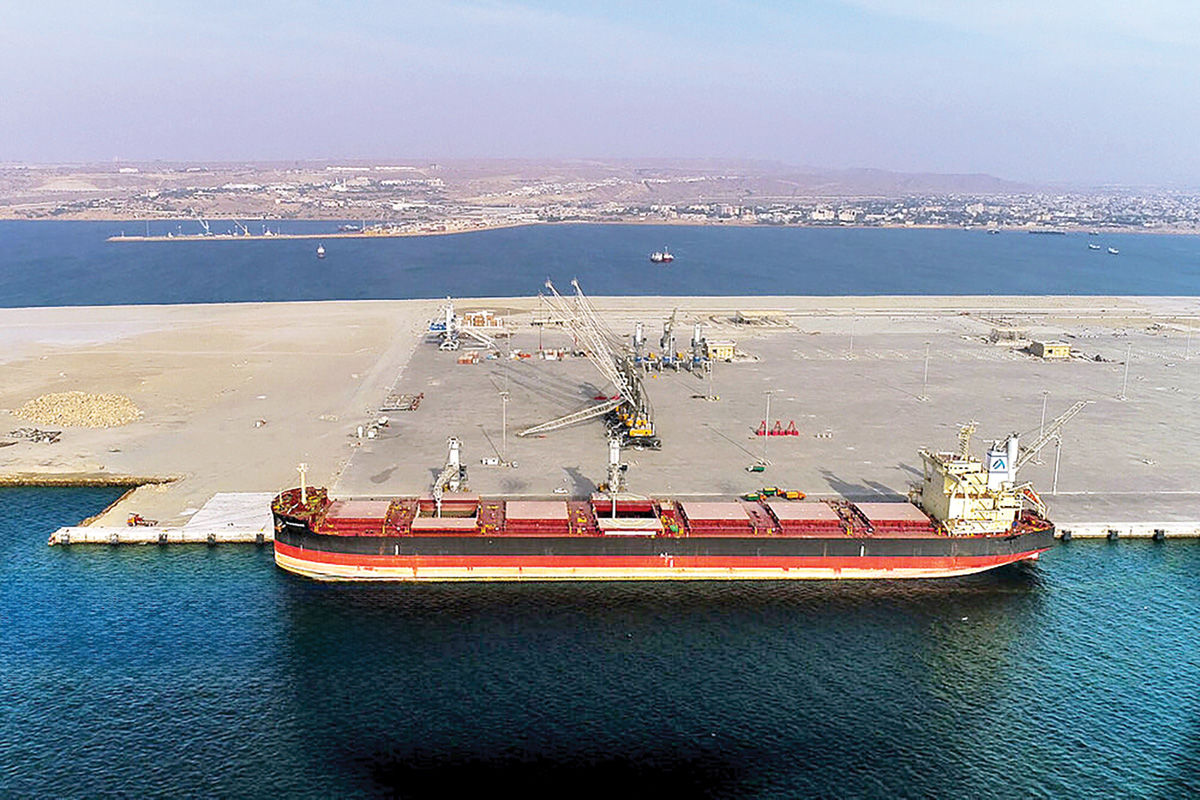
Iran’s direct access to the Persian Gulf and the Sea of Oman gives the country significant potential for a maritime-based economy, a capacity that has long remained underutilized. Yet many of Iran’s water-intensive and export-oriented industries are still concentrated in arid central regions, placing heavy pressure on scarce water resources, raising production costs and undermining long-term sustainability.
Policymakers and private sector experts increasingly argue that a gradual shift of such industries toward coastal areas—especially the Makran coast and southern provinces—offers a more viable development path.
The current industrial geography has imposed high economic costs. Over recent years, Iran has invested heavily in large-scale water transfer projects from the Persian Gulf to provinces such as Yazd, Isfahan and Kerman.
Estimates suggest around 70 million cubic meters of water are transferred annually through these pipelines, at a substantial cost per cubic meter. Experts contend that relocating water-intensive industries closer to the sea would be more economical and environmentally sustainable than continuing to move water inland.
The Makran coast, stretching roughly 780 kilometers from Minab to the Pakistan border, is frequently cited as a prime candidate. The region has strong potential for petrochemical, metal and energy-intensive industries, while also offering advantages in fisheries and aquaculture.
Several projects are already underway, including plans for new port-based economic cities near Bandar Abbas and along the Makran coast. If implemented effectively, these initiatives could lay the foundation for Iran’s first generation of integrated port cities.
Key Factor
Logistics is another key factor. Proximity to seaports reduces transportation costs for both imports of raw materials and exports of finished goods, directly improving competitiveness.
Access to regional markets—such as India, China and East Asia within a few hours’ flight—further strengthens the economic rationale. Ongoing rail projects, including the Chabahar railway, are expected to enhance connectivity between coastal zones and inland markets.
However, experts caution that industrial relocation is not automatically cost-free. Success depends on the availability of reliable infrastructure: stable electricity and water supply, power plants (including solar and combined-cycle facilities), rail and road networks, specialized industrial parks, and adequate housing and social services for workers. Without these complementary investments, relocation efforts risk stalling.
Private sector representatives emphasize that relocating existing, aging factories may be less efficient than directing new investments and expansion projects toward coastal areas.
Decisions should be made case by case, based on technical, economic and environmental assessments, while avoiding trial-and-error approaches. Security, regulatory stability and investor confidence are also seen as decisive in attracting capital without heavy state intervention.
Broader Perspective
From a broader policy perspective, the maritime economy reflects a more mature development approach—one that aligns geography, resources and logistics with economic logic.
Energy- and water-intensive industries, export-driven sectors and activities linked to maritime trade chains are natural priorities for coastal deployment. International experience suggests that such alignment can reduce costs, boost exports and enhance economic resilience.
Analyses indicate that a well-planned maritime-oriented strategy could ease water stress, lower production costs and strengthen Iran’s export capacity.
Its success, however, hinges on coordinated governance, full infrastructure provision and active private sector participation. If these conditions are met, shifting industry toward the coasts could become a cornerstone of Iran’s sustainable and resilient growth model.