
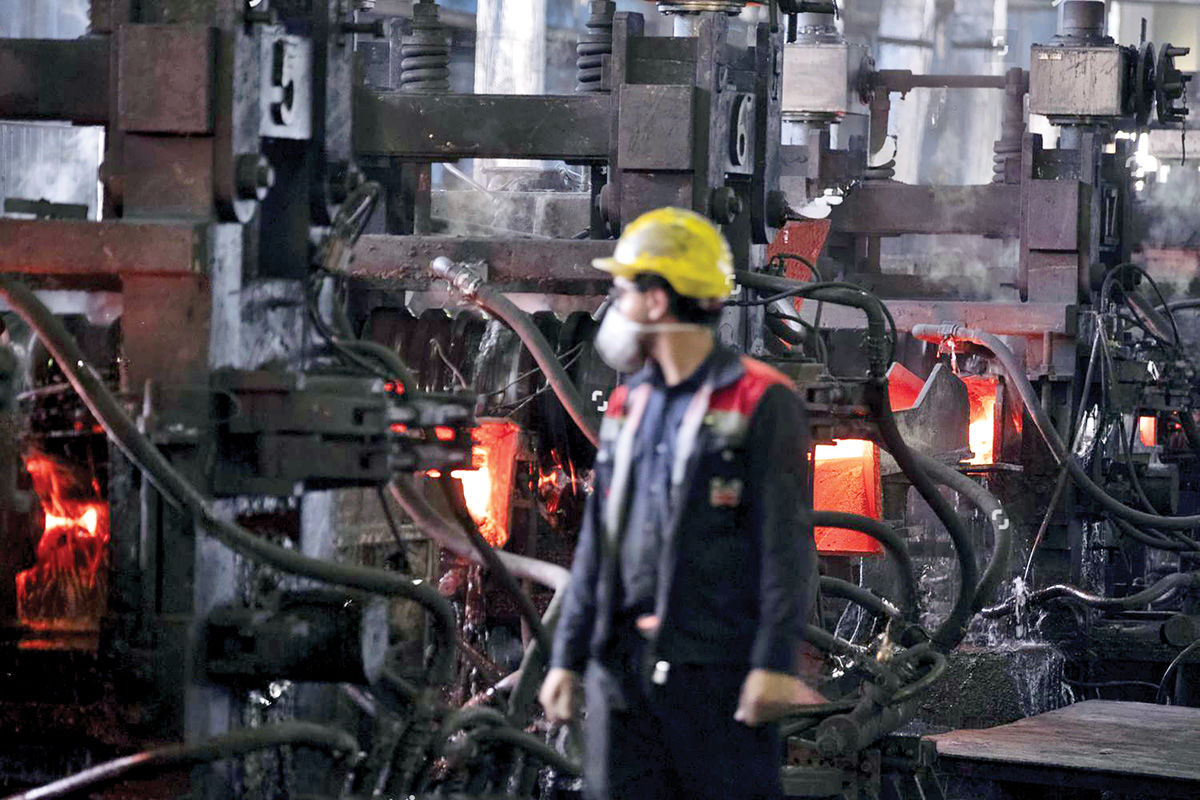
Economic data from the first half of the Iranian calendar year 1404 (March–September 2025) signal a serious slowdown in Iran’s industrial sector.
According to the Statistical Center of Iran, while overall GDP growth including oil was a modest 0.1% and excluding oil fell by 0.5%, industrial production—a key sub-sector—declined by 1.1%. Without oil, industrial output contracted by 0.9%, highlighting the economy’s heavy reliance on oil rather than manufacturing. Gross fixed capital formation also fell by 4.3% in the same period, reinforcing concerns about long-term investment in production capacity.
This is not the first time Iran’s manufacturing has faced structural constraints. Experts note that industrial growth has stagnated or even reversed since the early 2010s, largely due to international sanctions, currency shortages, and difficulties in importing raw materials and capital goods.
The combination of constrained investment, outdated machinery, and energy supply gaps has kept industrial productivity low, creating a vicious cycle of reduced output, lower investment, and declining efficiency.
Hassan Hosseingholi, a member of the Industry and Mining Commission of Iran’s Chamber of Commerce, told Donya-e Eqtesad: “A series of restrictive policies in recent years has slowed industrial growth and weakened exports. Decisions on foreign trade, often made without expert input, have become a major obstacle for enterprises. When a producer cannot access essential raw materials due to import restrictions, output inevitably falls.”
He criticized the government’s use of export duties, noting that new levies often contradict higher-level laws and disrupt long-term business planning.
Hosseingholi also highlighted currency allocation issues: “Exporters of private goods are forced to sell their foreign exchange at controlled rates, far below production costs. This creates a wide-ranging rent for importers while discouraging reinvestment and modernization of domestic production lines.”
He emphasized that energy shortages, rising input costs, and unpredictable regulatory changes are primary factors behind the decline in industrial output and capital formation.
Essential Steps
“If economic growth is to be achieved, regulatory stability, removal of illegal duties, genuine liberalization of foreign exchange, and facilitation of equipment imports are essential,” he said.
The polymer sector, however, demonstrates resilience. Saeed Torkaman, a polymer industry executive and Chamber of Commerce member, told Donya-e Eqtesad: “Despite energy imbalances, banking constraints, import restrictions, transport issues, and political pressures, we have largely maintained production and employment. Managers have worked hard to prevent external pressures from shutting down operations.”
He warned that artificial supply management by some petrochemical firms and ongoing smuggling of raw materials are exacerbating domestic shortages and raising costs. “The market structure must allow downstream producers to access raw materials at predictable, fair prices,” he stressed.
Iran’s industrial stagnation stems from a combination of domestic policy missteps, energy constraints, and international sanctions. Without immediate reforms in trade, currency allocation, energy provision, and regulatory predictability, the negative trend in industrial growth is likely to continue.
While sectors like polymers show that resilience is possible, sustainable expansion across the industrial landscape depends on creating a stable, investment-friendly environment.