
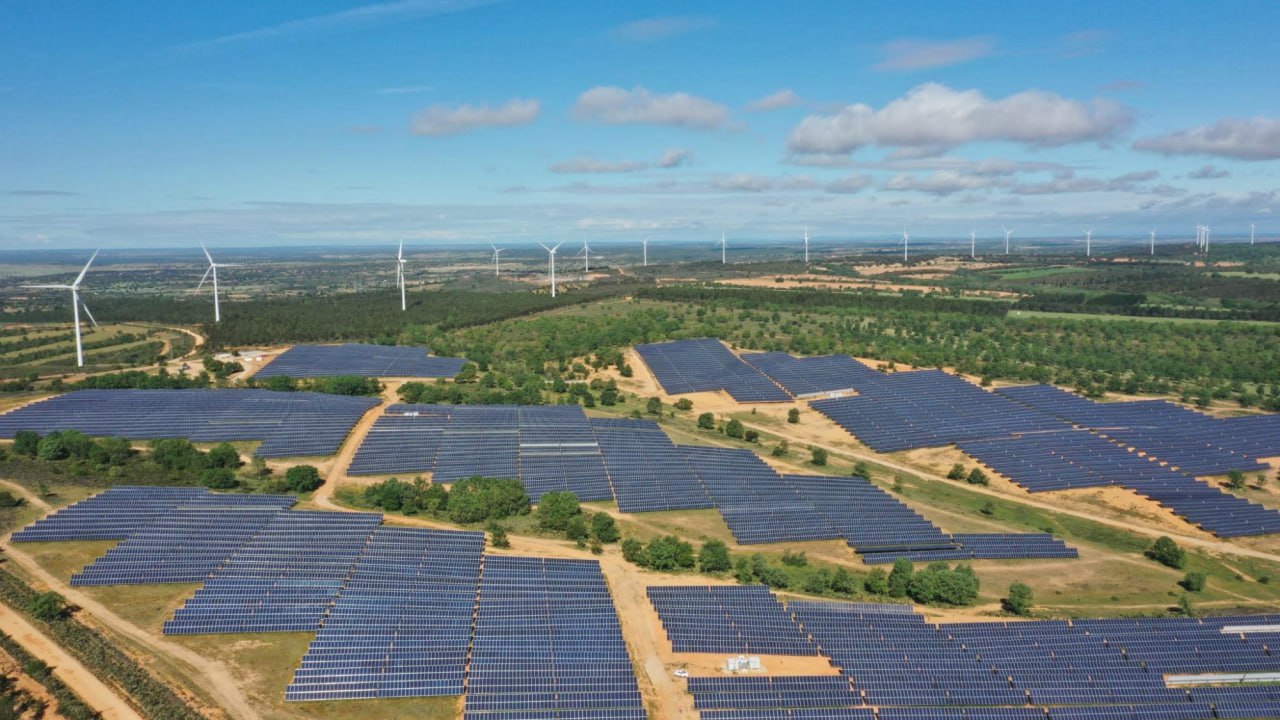
Iran and Spain are intensifying efforts to build a new framework for cooperation in renewable energy, focusing on technology transfer, equipment supply, and human-capital development.
According to IRNA, a recent virtual meeting hosted at the Spanish Economic and Commercial Office in Tehran brought together representatives from SATBA—the Renewable Energy and Energy Efficiency Organization of Iran—and 16 Spanish companies active in wind, solar, and clean-energy services.
The session outlined potential areas for collaboration as Iran accelerates its nationwide plans to expand renewable power generation.
At the opening of the meeting, Inigo Gil Casares, Spain’s Economic and Commercial Counselor in Tehran, underscored Iran’s strategic importance in the Middle East and its considerable wind and solar potential.
He noted that cooperation in the renewable sector does not fall under primary or secondary US and EU sanctions, although financial transactions and insurance coverage remain practical obstacles. Despite these challenges, he emphasized that opportunities still exist in equipment supply, engineering services, training programs, and capacity building for Iran’s growing clean-energy workforce.
Mohammad Satkin, senior adviser to Iran’s energy minister, detailed the country’s expansive plans to commission wind and solar farms across multiple provinces. According to Iranian officials, 11,000 megawatts of new renewable capacity is expected to be added by the first half of 2026—a target that significantly widens the scope for international technical cooperation.
During the session, SATBA officials presented Spain with several proposed areas of engagement, including joint training programs, knowledge exchange on grid integration of renewables, and engineering collaboration in fields such as concentrated solar power and advanced smart inverters.
Mehdi Tafazzoli, head of SATBA’s International Cooperation Development Group, highlighted the organization’s roadmap and investment models designed to attract global partners.
Spain, a global leader in clean energy with 35 GW of installed solar capacity, 30 GW of wind power, and 20 GW of hydropower, now meets 65 percent of its electricity demand through renewables.
Its recent nationwide blackout in April 2025—linked by some analysts to high solar penetration—has also drawn the interest of countries like Iran that are rapidly expanding renewable deployment and looking to understand technical complexities related to grid stability.
Both sides signaled readiness to continue discussions, marking a potential step forward in Iran–Spain energy cooperation amid a global shift toward cleaner power systems.