
Iran’s policymakers have set increasingly ambitious targets for expanding the country’s foreign trade, including a 23% rise in exports under the Seventh Development Plan. Yet the country’s logistics backbone—spanning ports, customs, roads and rail—remains insufficiently prepared to support these goals.
Interviews with sector specialists reveal a widening mismatch between Iran’s trade aspirations and the structural realities of its logistics network.
In recent years, the government has repeatedly emphasized the need to boost Iran’s participation in global trade routes and to position the country as a regional transit hub. But despite this rhetoric, key logistical constraints persist. As one expert notes, logistics performance globally acts as a “determining lever for export diversification, foreign investment attraction, and sustainable economic growth.” In Iran, however, many of the required conditions remain incomplete.
Mojtaba Baharvand, a logistics specialist, argues that Iran faces “serious obstacles” in aligning trade expansion with logistics capacity. Speaking to Donya-e Eqtesad, he stressed that “years of fragmented regulations, outdated infrastructure and weak institutional coordination have slowed the flow of goods across the country.”
According to Baharvand, shortcomings range from aging road fleets and insufficient storage facilities to an underdeveloped and outdated rail network. Political and financial instability, he adds, further weaken the country’s ability to modernize logistics systems.
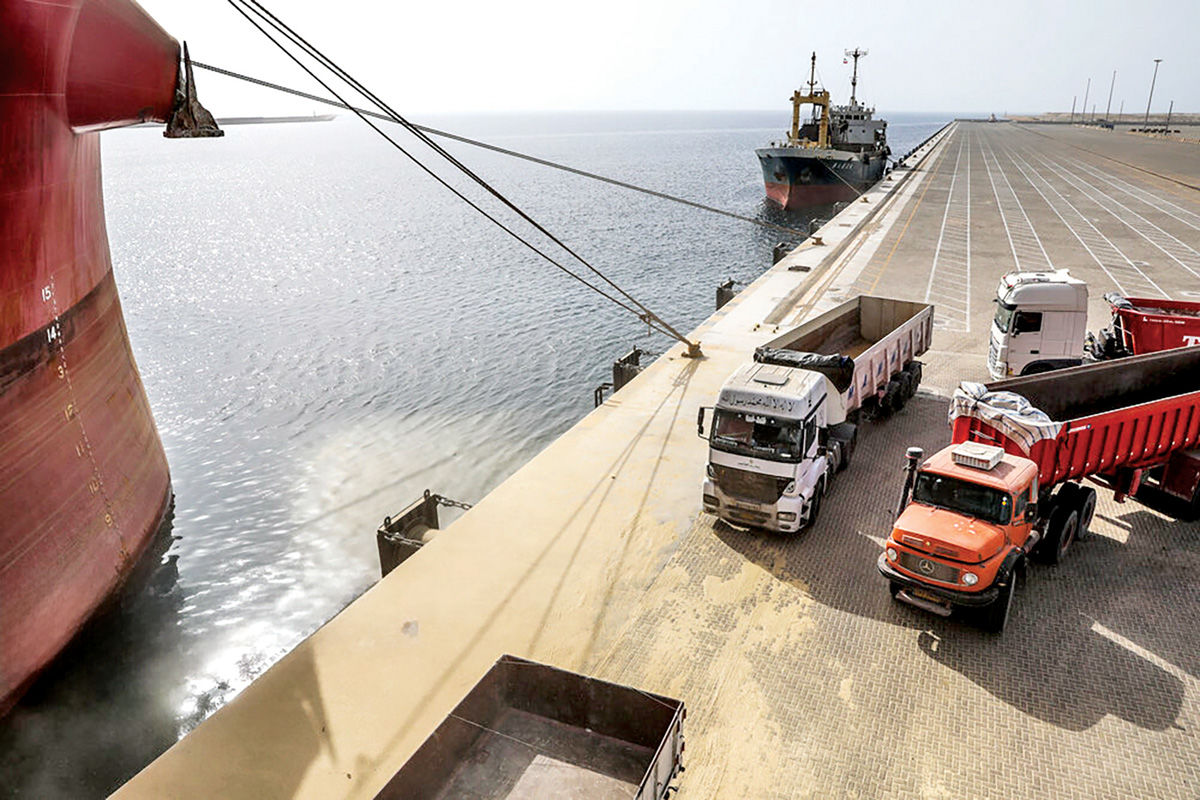
While ports—particularly in the south—hold substantial potential, infrastructure around them remains underdeveloped. “Chabahar has strong port capacity, but without modern rail and road links, much of this potential remains locked,” Baharvand said.
He pointed to recurring operational disruptions in port systems, noting that repeated outages in recent weeks prevented the clearance of containers for several days. Such delays directly affect production cycles and undermine Iran’s competitiveness in regional trade corridors.
Iran has also struggled to capitalize on geopolitical opportunities. The recent deterioration in relations between Afghanistan and Pakistan, which diverted part of the region’s trade flows toward Iran, could have boosted transit revenue. Instead, Baharvand notes that “cargo simply piled up at ports and border crossings” because customs operations were not scaled to meet new demand. Measures such as extending border working hours or accelerating customs procedures were not fully implemented.
Sanctions Barrier
Sanctions add another layer of complexity. Large vessels avoid Iranian ports, limiting economies of scale and reducing the attractiveness of routing goods through the country.
Baharvand argues that without easing sanctions conditions, Iran cannot modernize port operations or attract global logistics contracts. He also highlights structural weaknesses in the trucking industry, where transportation is “driver-driven rather than company-driven,” undermining efficiency.
Border infrastructure represents another major bottleneck. Mehran Nejati, vice president of the ICCIMA Transport Commission, describes many land crossings as “severely underequipped,” citing the Mahiroud crossing on the Afghanistan border as a key example. Containers transported from Bandar Abbas often end up stored for days due to slow processing capacity.
Nejati acknowledges Iran’s strong port infrastructure but identifies customs procedures and supervisory inefficiencies as core challenges. To address these gaps, he recommends developing modern storage facilities, expanding road corridors, and streamlining customs documentation and clearance.
Rail—a critical pillar of global freight transport—is identified as Iran’s most constrained link.
Mahmoud Safarzadeh, professor at Tarbiat Modares University, emphasizes that “single-track lines and low freight speeds form major choke points in the rail system.”
Despite Iran’s long history of railway construction, the sector has not kept pace with modern logistics needs.
Safarzadeh notes that shortcomings in both rail and road infrastructure restrict domestic cargo flows and reduce the country’s ability to integrate into international supply chains.
Analysts warn that unless Iran addresses its logistical shortcomings—particularly regulatory inefficiencies, infrastructural gaps and operational delays—trade expansion goals will remain out of reach.